
New Short Story - 'Ariadne and Theseus'

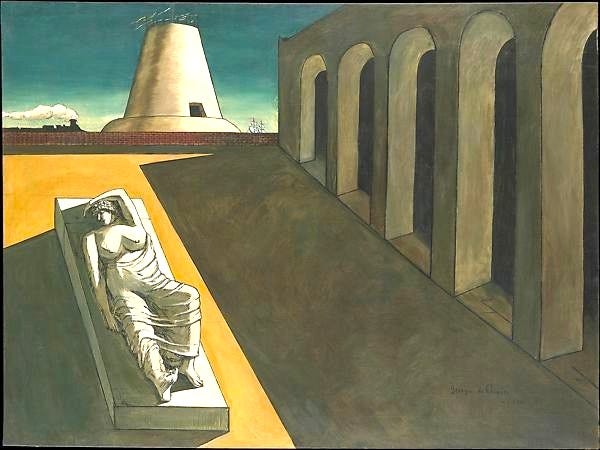
Roberto Calasso wrote regarding Ariadne (in The Marriage of Cadmus and Harmony), that she died many different and often conflicting deaths, more than any other figure in Greek myth. What is much less well known is that she also lived many different, equally conflicting, lives. There are several fragmented and varying stories of the incidents in her life, most relating to the tale of the Minotaur, the Labyrinth, Theseus and her subsequent death on the island of Delos.
But this myth too, has alternative versions. It is by reading one of the more obscure of these accounts that we discover that the Labyrinth adventure was in fact to be Theseus’s last.
The ninth year had arrived and the fourteen Athenian youths stepped ashore timidly at the noisy port of Herakleion, ready to be sent by King Minos for sacrifice to the terrifying savage bull-man known on the mainland as the Minotaur. On the island he was known as Asterius, the son of the King’s wife Pasiphae and the divine Cretan bull sent by Poseidon. The arrangement was the King’s revenge on Athens for the killing of the celebrated Cretan athlete Androgeos in the city. Androgeos was the king’s son and Ariadne’s brother, and it was Ariadne who now stood looking out contemptuously at the nervous group as they stood huddled together waiting at the harbour. As she scanned each aristocratic son or daughter of Athens her eyes soon caught those of an older, calmer man amongst them. She knew this must be Theseus.
Ariadne understood that Greek heroes, especially Theseus, instantly forget their women, and quickly move on without regret to the next adventure and the next princess, as if they didn’t have a past at all. Her tragic future on the island of Naxos, revealed to her by her husband Dionysus, would be nothing more than another episode in the expanding story of the Athenian hero. She was determined to stop this, whatever it took.
But now, as Theseus looked calmy across at her, he seemed unafraid, almost arrogant; she smiled back, knowing instantly both his future and her own.
But what Theseus and the Athenian youths did not know was that this year, for only the second time during this sinister arrangement, the sacrificial youths were in fact destined for the bull games in the central court of the palace. Not that this would be any less dangerous than facing the Minotaur. But everything expected of the young Athenians would be explained to them by the Priest of Poseidon. They would take part in acrobatic rituals where they were to vault over a charging bull, grasping the horns of the snorting animal as they leapt, making the bull jerk its neck violently upwards, thus providing the leaper with the momentum necessary, if they were particularly skilled or daring, to perform somersaults before landing safely on the ground on the other side of the bull.
Ariadne remembered the first time these perilous bull games with the Athenians had taken place nine years before. Most of the boys who took part, as well as three slim dark-haired girls, perhaps the same age as she was now, had been gored by the bull during the leap, gushing with blood in mid air before they crashed lifeless to the ground. No doubt the same fate awaited the majority of the youths she was looking at now. But her thoughts had already moved on to Theseus.
Later that day one of Ariadne’s maids returned back to the palace after having carried an important message to Theseus from the princess. She would arrange for his escape, and he was to meet her at the entrance to the labyrinth early the following morning, before the bull games were to begin. Just a few years earlier the dark winding passageways of the labyrinth had been Ariadne’s own dancing floor, a broad space open to the sky, where she had danced the Crane dance in the yellow moonlight. Now the craftsman Daedalus had been ordered to cover it over to make a shadowy maze of claustrophobic tunnels, and so conceal its terrible secret from the dreaded invaders from the mainland.
But it was still the same path to the centre as it always had been, so Ariadne knew every step of the way. But Theseus, who had come to kill the Minotaur and thus, he thought, free the Athenian youths, would need her help. When the hero arrived the next morning armed with his sharp, polished sword, Ariadne, smiling to herself, gave him what she said was a magical illuminated ball of string made especially for her by Daedalus. She tied one end to the lintel of the entrance door and gave him the rest. When he had killed the monster who was sleeping at the centre of the labyrinth, she told him he was to follow the string back to the entrance where, she, Ariadne, would be waiting for him.
Theseus went willingly inside while Ariadne waited. After a few minutes, she took out her freshly sharpened knife and cut the string. Putting on her crown of fiery gold and red Indian gems, given to her by Dionysus, she then entered the labyrinth. In a few minutes she was at the centre.
Theseus crept slowly through the winding passageways in the dark, the string in his sweating hand giving him no light at all. When he eventually arrived at the centre he was just able to make out through the dimness a vague, huddled shape lying on a low stone bench; surely the sleeping monster. He moved stealthily towards it, sword raised, breath held. He was within a few feet of the prone figure, when it suddenly turned around and with a savage scream hurled itself at him, thrusting a sharp silver dagger deep into his throat. He fell heavily down in the dust, choking on his own blood and was dead within seconds. The Minotaur stood up and removed its mask. There stood Ariadne covered in the blood of the hero. ‘Now, there will be never be a Naxos!’ she screamed.
I enjoyed this. It's as though once Ariadne had fulfilled her function of treacherous woman helping Theseus kill her brother, the story writers didn't know what to do with her. I like this version!